Rolling Go: A Sweet & Friendly Display Font for Small Business Branding
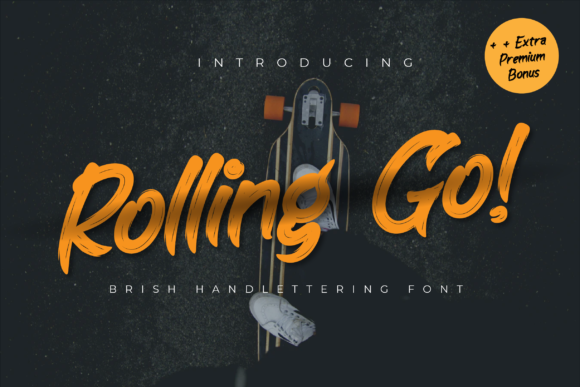
As a small business owner who’s designed everything from product labels to Instagram stories myself, I know how much one thoughtful choice—like Rolling Go—can elevate your entire brand. Rolling Go is a sweet and friendly display font. Its natural and unique style makes it incredibly fitting for a large pool of designs—and that includes the real, everyday materials your customers actually see: your café menu, handmade soap label, wedding invitation suite, or online shop banner. Because Rolling Go is a display font, it’s built to shine at larger sizes where personality matters most—not buried in fine print, but leading with warmth and charm.
Rolling Go for Handmade Product Labels and Craft Packaging
If you make candles, bath salts, or small-batch jams, your product label is often the first physical impression customers have. Rolling Go adds instant approachability without sacrificing polish. Its gentle curves and organic rhythm echo the care behind handmade goods—no sterile sans serif required. Use Rolling Go for your product name or flavor title (e.g., “Honey Lavender” or “Spiced Maple”), then pair it with a clean, readable sans serif like Inter or Open Sans for ingredients and net weight. As a display font, Rolling Go holds up beautifully on 2-inch sticker labels and matte kraft paper—just test print at actual size before finalizing. Remember: as a commercial font, always confirm its license covers physical product use before applying it to retail packaging.
Rolling Go for Café Menus and Local Business Signage
Your café menu isn’t just information—it’s atmosphere. Rolling Go brings soft energy to chalkboard-style headers, seasonal specials banners, or even laminated tabletop cards. Because Rolling Go is a sweet and friendly display font, it invites lingering rather than scanning. Try it for dish names (“Brown Butter Shortbread” or “Vanilla Bean Latte”) while keeping prices and descriptions in a highly legible typeface. On printed menus or digital menu boards, Rolling Go remains clear at 24–36pt—even under ambient lighting. It’s not meant for paragraphs, but as a display font, it builds cohesion across your space: same style on your front window decal, receipt header, and loyalty card.
Rolling Go for Wedding Invitations and Elegant Branding
Bridal clients, boutique stationers, and event planners need fonts that feel intentional—not generic. Rolling Go delivers quiet elegance with a human touch. Its natural flow reads as hand-crafted but never childish; refined but never stiff. Use it for couple names, ceremony date, or “RSVP” callouts on digital invites or letterpress-printed suites. Since Rolling Go is a sweet and friendly display font, it pairs gracefully with classic serifs like Playfair Display or timeless sans serifs like Lora for body text. For consistency, apply Rolling Go across all touchpoints: welcome sign, seating chart header, and thank-you note envelope—so every detail feels like part of the same thoughtful story.
Rolling Go for Social Media Graphics and Instagram Story Highlights
Your Instagram feed is visual real estate—and Rolling Go helps your posts stand out in a scroll. As a display font, it works brilliantly for quote graphics, limited-time offer banners, or new product launch teasers. Its unique silhouette catches attention faster than overused script fonts, while its friendliness aligns with warm, values-driven brands (think: sustainable skincare, mindful coaching, or local florists). Drop Rolling Go into Canva or Figma at 48–72pt for story text overlays—it scales cleanly on mobile screens. Just avoid using it for captions or alt text; reserve it for bold, scannable moments where tone and recognition matter most.
Rolling Go for Boutique Logos and Small Business Identity Systems
A logo needs to be memorable at thumbnail size—and Rolling Go delivers distinctiveness without complexity. Its natural and unique style makes it incredibly fitting for a large pool of designs, especially when your brand voice leans kind, grounded, or artisanal. Think: a ceramic studio named “Clay & Co.”, a neighborhood bookstore called “The Dusty Page”, or a holistic wellness practice. Use Rolling Go for the wordmark alone—or combine it thoughtfully with a subtle icon. As a display font, it’s strongest when used intentionally: not for full websites or long-form content, but as the visual anchor of your identity system. Pair it with a neutral, versatile sans serif for supporting text (like headings on your website or email footers) to maintain balance and readability.
Rolling Go for Thank-You Cards and Customer-Facing Print Materials
That handwritten “thank you” note? Now imagine it elevated—without losing sincerity. Rolling Go bridges the gap between personal and professional in printed customer touchpoints. Use it on branded thank-you cards, packaging inserts, or post-purchase mailers. Its friendly rhythm echoes genuine appreciation, while its design integrity reassures customers they’re working with someone who cares about craft. Because Rolling Go is a sweet and friendly display font, it avoids the coldness of corporate fonts and the fragility of ultra-thin scripts. Print it on recycled cotton paper or kraft stock—it retains character even at 18–20pt. And yes: verify the font license includes commercial printing before ordering 500 cards.
Rolling Go for Online Shop Banners and Digital Ad Headlines
When shoppers land on your Shopify homepage or pause mid-scroll on Facebook, your headline has seconds to connect. Rolling Go adds warmth and distinction to sale banners (“Summer Sale Starts Now”), collection headers (“New Arrivals”), or limited-edition drops. Its natural and unique style makes it incredibly fitting for a large pool of designs—including high-contrast digital spaces where personality cuts through noise. As a display font, it performs well against solid backgrounds and subtle gradients. Avoid overloading it with effects—let its inherent friendliness do the work. And because Rolling Go is designed to become part of your visual language, using it consistently across ads, emails, and site headers builds subconscious recognition—turning casual browsers into loyal customers.